

The Golden Handcuff Illusion: How Denver’s "HELOC Squeeze" is Quietly Costing Homeowners Thousands
It is the single most common refrain heard across the Denver metro area today: "I would love to move, but I can’t give up my 3% mortgage rate." It makes perfect sense on the surface. Securing a historically low fixed rate during the pandemic buying frenzy of 2020 or 2021 feels like winning the financial lottery. To abandon it voluntarily seems like a major mistake.
However, as a fiduciary and local market advisor, I am increasingly helping Denver homeowners uncover a hidden financial trap that is quietly eroding their monthly cash flow. We call it the "HELOC Squeeze."
If you are one of the thousands of Front Range homeowners who tapped into your home’s soaring equity over the last few years to finish a basement in Stapleton/Central Park, add an ADU in the Highlands, or remodel a kitchen in Wash Park, your actual cost of borrowing may be vastly higher than you realize. The psychological comfort of your 3% first mortgage is likely masking a much harsher financial reality.
---Anatomy of the HELOC Squeeze in Metro Denver
To understand how this trap springs shut, we have to look at how home equity lines of credit (HELOCs) are structured. Unlike your primary mortgage, which is locked into a fixed rate for 30 years, the vast majority of HELOCs are tied to a variable rate indexed directly to the U.S. Prime Rate.
When the Federal Reserve embarked on its aggressive rate-hiking campaign to combat inflation, the Prime Rate surged from a rock-bottom 3.25% to 8.50%. Because most banks price HELOCs at Prime plus a margin (often 0.5% to 2% depending on your credit profile), many Denver homeowners who were paying 4% or 5% on their equity lines a few years ago are suddenly staring at interest rates of 9.0% to 10.5% today.
Because these rates are variable, your monthly payment has likely doubled—or even tripled—on that portion of your debt. Even though your first mortgage remains untouched, your total monthly housing outflow has risen dramatically. This is the essence of the HELOC Squeeze: you are paying a premium to stay in a home that may no longer serve your family's needs, all to protect a "low" interest rate that is increasingly becoming an illusion.
---The Math Behind the "Blended Rate" (A Denver Case Study)
To see how this plays out in real life, let’s look at a typical scenario for a homeowner in a high-demand Denver suburb like Littleton or Arvada.
Imagine you bought or refinanced your home in 2021.
- First Mortgage: $450,000 at a fixed rate of 3.0%.
- Monthly Principal & Interest (P&I): $1,897.
In 2022, as Denver’s median home price surged past $600,000, you decided to take out a $150,000 HELOC to finish your walk-out basement and add a deck. At the time, your HELOC rate was a manageable 4.5%, adding about $562 to your monthly obligations (interest-only). Your total monthly payment was $2,459.
Fast forward to today. Your first mortgage is still 3.0%, but your variable HELOC rate has skyrocketed to 9.5%.
- Your new monthly HELOC payment has jumped to $1,187 (interest-only).
- Your combined monthly payment is now $3,084.
To calculate your true cost of homeownership, we must look at your Blended Interest Rate. When we weigh your $450,000 first mortgage at 3% against your $150,000 HELOC at 9.5%, your total outstanding debt is $600,000.
Your blended interest rate is actually 4.63%.
If your HELOC has entered its amortization phase (where you must pay both principal and interest, rather than just interest-only), that blended rate feels even heavier on your monthly budget. Suddenly, the financial gap between "staying put with a cheap mortgage" and "selling to buy a more suitable home" narrows significantly.
---The Triple Threat: HELOCs, Property Taxes, and Insurance Hikes
The HELOC Squeeze does not exist in a vacuum. Denver homeowners are currently facing a triple threat of rising housing costs that make holding onto an underutilized property incredibly expensive.
1. Historic Property Tax Reassessments
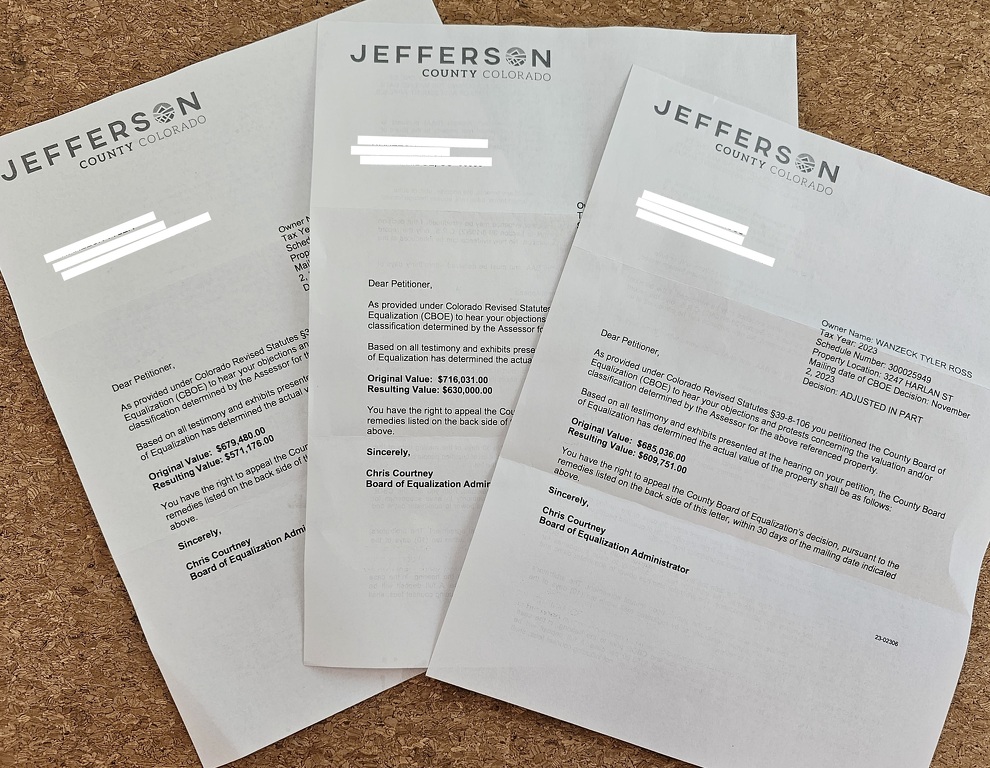
Colorado’s recent property tax assessment cycle saw home values rise by historic margins. Across Denver, Arapahoe, Douglas, and Jefferson counties, homeowners saw assessed values spike by 30% to 45%. Even with legislative mitigation efforts at the state level, your monthly escrow payments for property taxes have likely climbed by hundreds of dollars over the last 18 months.
2. Skyrocketing Homeowners Insurance Premiums
Due to the increasing frequency of severe weather events along the Front Range—including catastrophic hail storms and the systemic wildfire risks in the wildland-urban interface—homeowners insurance premiums in Colorado have risen at some of the fastest rates in the nation. Many Denver homeowners are seeing annual premium increases of 20% to 40%, further bloating their monthly carrying costs.
When you combine a surging variable-rate HELOC with rising property taxes and soaring insurance premiums, that "cheap" 3% mortgage is suddenly surrounded by a very expensive supporting cast.
---Strategic Solutions: How to Break Free from the Squeeze
If you find yourself squeezed by these rising costs, you have several strategic paths forward. You do not have to remain hostage to your interest rate.
- The Strategic Downsize or Rightsize: If you have significant equity in your home, selling now allows you to capture those gains tax-free (up to $250,000 for single filers or $500,000 for married couples under Section 121 of the tax code). You can use that massive cash windfall to buy your next home with a substantial down payment—or even pay cash entirely—completely eliminating both the first mortgage and the HELOC.
- The Debt Restructure Refinance: In some cases, consolidating a high-interest HELOC and a low-interest first mortgage into a single, fixed-rate second mortgage or a new first mortgage makes sense. If your blended rate is 5% and current market rates are hovering around 6%, the premium to lock in a stable, predictable fixed payment on your entire debt load may be well worth the peace of mind.
- HELOC-to-Fixed Conversions: Many lenders allow you to lock in a portion of your outstanding HELOC balance at a fixed interest rate for a set term. While this rate will still be higher than your first mortgage, it protects you from further rate hikes if macroeconomic pressures push the Federal Reserve to hold rates higher for longer.
Run the Numbers Before You Decide
In real estate, emotional anchoring is a powerful force. It is incredibly easy to anchor your financial identity to a 3% mortgage rate while ignoring the thousands of dollars leaking out of your bank account through a high-interest HELOC, rising taxes, and escalating insurance premiums.
As your local market expert, my job is to help you look past the headlines and analyze your home's financial performance objectively. I use a proprietary Blended Rate Calculator specifically designed for Denver homeowners to determine if staying in your current home is actually costing you money compared to making a strategic move.
If you want to run the numbers on your specific property, calculate your true blended rate, and explore your options in today's Denver market, reach out today for a private, no-obligation consultation.